February 1
 Upgrading on December 7, 1998… Upgrading on December 7, 1998…
Dear Breakup Girl,
I’ve been dating the same guy for a little over three years. I really want to get married, or at least engaged, soon. My boyfriend on the other hand wants me to be his “permanent girlfriend” and has no intention of putting a ring on my finger any time soon. He tells me he loves me and that I’m the best thing that has ever happened to him and that I’m the best girlfriend he’s ever had.
I haven’t broken up with him yet because I keep waking up each morning thinking “maybe today is the day he’ll change his mind.” What do I do? Dump him and wait for him to come to his senses, dump him and forget about him or keep waiting? Thanks for any advice, I’m miserable but terribly in love.
— Tracy
Dear Tracy,
Do you want to get married, like, in life, or do you want to get married to him?
If it’s the former, this “PG” relationship won’t fit the bill — and waiting isn’t working, is it? See “Walk,” above.
If it’s the latter, consider this: what’s it worth to you to be with him, period, no matter what your status? Can you live and love in this relationshipright here, right now, complete and whole as is, without holding your breath for something to happen? If he’s as mad about you as he says, then he could be like Tile Guy, above. As Dalma Heyn writes in the same article, “Unless the [person] you’re waiting out is behaving badly, not just skittishly, remind yourself that you can wait as long as [s/he] can. And that trusting the process, and [him/her], and yourself, will let you enjoy these unencumbered months (or, yes, years) of courtship. You’ll have plenty of time to be married.”
Love,
Breakup Girl

January 28
Decision time on December 7, 1998…
Dear Breakup Girl,
I’m struggling with the decision of whether I should break up with my girlfriend. I’m 32, she’s 28 and we’ve been dating for a little over a year. I guess it’s to the point of do we take the next step, marriage, or do we go our separate ways? I had thought that we were progressing towards marriage. However, for the last several weeks, she has seemed increasingly unhappy. Neither of us seem to have much interest in sex anymore. And, I know that both of feel the other is taking us for granted. Don’t get me wrong, I think she is a great person. And, the last thing that I want to do is cause her pain. But at the same time I don’t want to waste her tine and mine on a love that’s grown cold. I guess the nutshell questions are: Is there hope to respark what we once had? And, if so, how?
— Jim
Dear Jim,
Time to pop the question. No, silly, not that question. This one: “Hey, muffin, is there something bothering you?” What worries me is not that you two are unhappy; it’s that you, Sparky, have no clue as to why. Either you two have to hone that thing we call Communication Skills, or you have to admit that your heart isn’t in this in the first place. And I have to admit that I’m leaning toward the latter. Why? Well, to be fair, perhaps passionate poetry just isn’t your thing. But “Don’t get me wrong, I think she is a great person,” is what you say before you say, “However, I am a stronger candidate for the school board.” Not before you say “I do.”
Love,
Breakup Girl
January 23
Getting impatient on December 7, 1998…
Dear Breakup Girl,
Is there any cool way or time to find out if my boyfriend is ever going to propose? I’ve held off for a REALLY long time because I did not want to rush things or do that stereotypical ultimatum thing. But…in January, we will have been together 4 years. I’m 25; he’s 26. I know that’s part of the problem — I’m at “that age,” we attend weddings constantly, and not a week goes by where someone doesn’t ask me when we’re getting married. Apparently, people don’t do that to men. Or it doesn’t bother him. It’s starting to bother me a lot, especially since I have no answer for myself.
This is not a letter I ever expected to write. ( I bet you wish you had a dollar for every time you read that line.) I have always been, and still am, very career oriented, not man-dependent. I was “most likely to succeed” and everyone expected me to do what I said — escape from the midwest and conquer the world.
We met in my last semester of college. Since he is on the (cough) 10-year bachelor’s degree plan, we compromised by moving back to the nearest major city after I graduated so he could finish his degree in-state. That city is my hometown, where I swore I’d never go back, where I’m sitting now.
(more…)
August 23
 Where’s the romance on November 2, 1998… Where’s the romance on November 2, 1998…
Dear Breakup Girl,
So here’s a really odd dilemma. My boyfriend of about a year just asked me to marry him. Great, right? Well, yeah, except there were no bells and whistles, no ring, no special moment, just–we had lunch, we did the dishes, he asked me to marry him–you get the picture. And believe me, I am nothing if not direct with this man–as soon as the subject of marriage came up, I told him I wanted the full shebang, including an engagement ring. (We are both in our 40’s and have been married before, so it’s not so obvious that I would want a traditional engagement.) When we talked about it afterward, he asked if I were disappointed that he didn’t go the traditional route. I didn’t say, uhhh, yeah, but I did tell him I thought there was a reason people set special moments aside in their lives–to say “this is a very important moment and I want to make sure this lasts in my memory.”
To present his side of the story: he said he was happy to do something special when he presents me with the ring, but he was feeling that if he put off asking just because he hadn’t found the right ring, or had to save up to buy it, or wait for the right moment to propose, that it would become an empty ritual. He also said that his proposal was un-premeditated and he just went with the impulse.
I said yes to his proposal, but I can’t seem to shake the feeling that, if he ignored my request about something this important to me–what’s he going to do when other important issues come along? I hate to say this, but I feel a little like a special moment and memory has been stolen from me.
(more…)
July 12
 Going nuts on October 26, 1998… Going nuts on October 26, 1998…
Dear Breakup Girl,
I have a question for you concerning psychotic ex-girlfriends. My boyfriend’s ex, we’ll call her Betty, of MANY years, truly needs therapy. Since the beginning of our relationship, she has done the following to both of us: prank phone calls at all hours of the night and day, followed us, driven by our apartments, mutilated our cars several times, picked a fight with me, and most recently, after much denial, apologized to him. Trust me, this is just the tip of the iceberg for what we have gone through with her. Unfortunately, given our vague statutes on stalking and harassment, we could never prove anything to press charges. I have tried with all my might to be mature about this and remain calm. But the longer it continues, the more difficult it becomes to control myself. It’s unfair for me to have to go through this. I didn’t even know the woman before Will and I have never done anything to her, not even in retaliation. It’s not my fault that she cannot accept the fact that their relationship is over and she shot any chance of them being just friends. We are getting married very soon and I am beginning to wonder if this childish behavior will ever cease. (more…)
June 22
Popping that question on October 19, 1998…
Dear Breakup Girl,
I met a great guy a few months ago. He’s smart, funny, nice, beyond sexy and has the cutest Irish accent I’ve ever heard. We had been dating for a couple of months and everything was cool until he popped the question:Â Thatquestion. He asked me to marry him.
Unfortunately, this wasn’t any bold declaration of reckless, impetuous love, it’s a last-ditch attempt to not get deported.
I was speechless, but managed to sqeak out a “no” before I got the hell out of his place. He called me later that night, and said he understood why I wouldn’t marry him, and that he still wanted to see me anyway.
(more…)
February 17
Loving too much on September 21, 1998…
Dear Breakup Girl,
How many times do you think a woman should get divorced before she should begin to question the validity of her choice to continually get married? Do you think women should start to re-think the whole marriage idea after two divorces? Four? Five? Or do you feel that as long as the woman is happy going from marriage to marriage, she should do so, regardless of what she does to her reputation, her children, and those men she leaves behind? Is marrying a right, to be exercised as you please, or is it more of a responsibility, especially after multiple divorces? Should society simply turn a blind eye to women who marry time and time again, only to divorce a year or two later to start again? Or should someone (for example, a Super Heroine who specializes in breakups) start some sort of therapy group for women who unceasingly seek marriage, only to seek divorce? Thanks.
— Crazy Doug
Dear Crazy Doug,
How many questions do you have to ask Breakup Girl before she realizes they aren’t entirely hypothetical?
(more…)
February 16
No way out on September 21, 1998…
Dear Breakup Girl,
I have been with the same person for 2 and a half years now, and things have been really good–the best I’ve ever had. However, since I’m 25, and most of my friends are around that age too, the big topic/issue/event of this past summer should be obvious–yup, weddings. Goin’ to ’em, bein’ in ’em, bridal showers, engagement parties, flowers, dresses everything. Luckily, it’s mainly “other” people, not close friends. (A co-worker; my best friend’s old high school chum; the son of some of my parents’ friends, etc.)
But—and this is an important but—it is driving me absolutely insane. Normally a reasonable and logical person, I am finding myself alternating between renting movies or surfing web sites or talking to engaged people, basically doing having to do with weddings OR feeling the urge to dump my boyfriend, quit my job, and flee the country. Hike around Europe by myself, work in a coffee shop, basically pretend I’m still 19. Or pick up guys in some random bar. Something. Anything but wearing white. All of which would be fine if it weren’t for the dreams. Yup. Normally sane me has been having terrible anxiety dreams where I get married but I don’t want to, where my boyfriend catches me kissing other guys, everything. I want to marry this guy, eventually. Maybe even in a year or two. I just want to stop being bombarded by this whole mudslide of marriage details while I’m trying to figure out my own life. (And yes, I know, the magazines/movies/stores have always been there, I just never noticed.)
(more…)
February 15
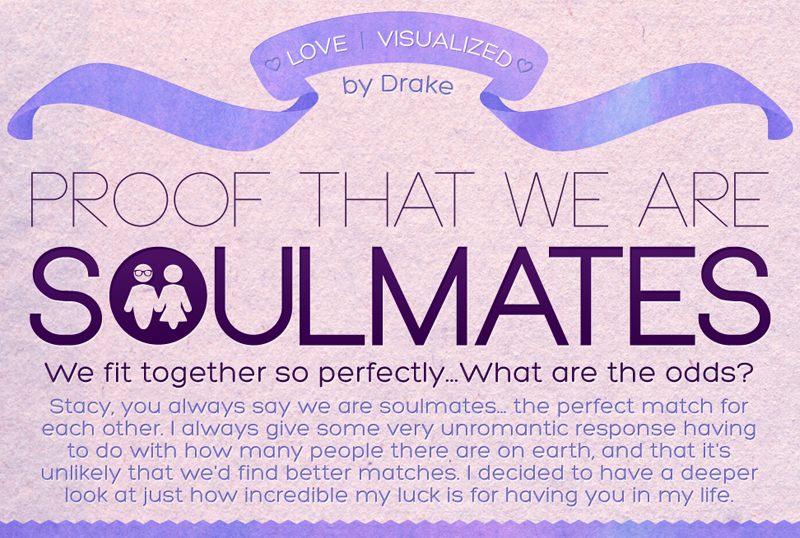
The most heart-warming — and geekiest — internet proposal yesterday had to be the mashable employee who proposed to his girlfriend via infographic. If you loved that story like we did, check out DVICE’s rundown of 5 nerdy ways geeks are popping the question as well as their earlier Top 10 geeky proposals of 2011.
February 9
Growing apart on September 21, 1998…
Dear Breakup Girl,
Damn it. I can’t believe I’m writing this.
I am currently married to a person I have been with for five years. We have an almost two-year old son whom we both adore. My husband is not a jerk. He’s not abusive. He’s not distant or cold or boring or loveless. He even gets my jokes, for god’s sake. My mother thinks he’s Mr. All Time Wonderful (“the son she never had”, only she likes my brother a lot as well).
When we met he was an economics major and heading to do his masters in pure math. I had messed about in high school and so had to do “time” in college before I was even able to get into a University program. Things have turned out rather well for me. I’m finishing up my degree (in English lit and Religious Studies) this year — I took time off to have our son — and will probably begin my masters next fall. I’ve also ‘fallen in’ with the literary crowd round here and there is pressure to publish from other published people (I write poetry so we aren’t talking big bucks here). My husband now has a fairly good job as an accountant and rather than taking a masters he’s gone the route of professional designations — which is no bad thing in and of itself.
(more…)
Next Page »
|





 e-mail to a friend in need